
Cloud Security Assessment Checklist for Enterprises: A Practical Guide

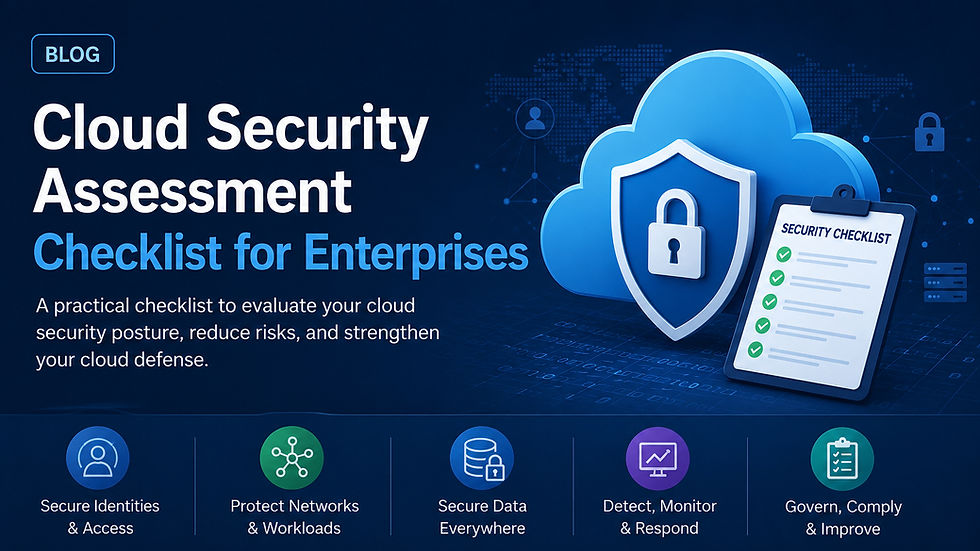
As enterprises accelerate cloud adoption, security often becomes more complex, not less. Multi-cloud environments, remote teams, containerized applications, third-party integrations, and evolving compliance requirements create a larger attack surface than traditional infrastructure ever did.
The challenge is not simply moving workloads to the cloud. It is ensuring your cloud environment remains secure, compliant, resilient, and scalable as your business grows.
A cloud security assessment helps organizations identify risks before they turn into incidents, data breaches, compliance failures, or operational disruptions.
In this guide, we walk through a practical cloud security assessment checklist enterprises can use to evaluate their cloud posture.
Why Cloud Security Assessments Matter
Many organizations assume cloud providers handle security entirely. In reality, cloud security follows a shared responsibility model.
While providers secure the underlying infrastructure, enterprises remain responsible for:
Identity and access management
Application security
Data protection
Configuration management
Network controls
Compliance governance
Workload security
Incident response readiness
Misconfigured storage buckets, overly permissive IAM roles, exposed APIs, weak secrets management, and unpatched workloads remain some of the most common causes of cloud breaches.
A structured security assessment helps uncover these gaps systematically.
Cloud Security Assessment Checklist for Enterprises

1. Identity and Access Management (IAM)
Identity remains one of the biggest cloud security risk areas.
Assess:
✔ Are all users authenticated through centralized identity management?
✔ Is multi-factor authentication (MFA) enforced for privileged accounts?
✔ Are IAM roles following least privilege principles?
✔ Are stale or inactive user accounts removed regularly?
✔ Is privileged access monitored and audited?
✔ Are service accounts scoped correctly?
✔ Are shared administrator accounts eliminated?
Common Risk: Excessive permissions often become the easiest path for attackers after credential compromise.
2. Network Security Review
Cloud networking must be intentionally segmented.
Assess:
✔ Are VPCs/VNets properly segmented?
✔ Are security groups/firewall rules overly permissive?
✔ Are public-facing assets clearly identified?
✔ Are management interfaces exposed to the internet?
✔ Is east-west traffic monitored?
✔ Are VPN or zero trust access controls implemented?
✔ Is DDoS protection enabled?
Common Risk: Open ports and flat network architecture dramatically increase blast radius.
3. Data Protection and Encryption
Enterprise data protection goes beyond simply enabling encryption.
Assess:
✔ Is data encrypted at rest?
✔ Is data encrypted in transit?
✔ Are encryption keys centrally managed?
✔ Is customer-managed key usage required for sensitive workloads?
✔ Are backups encrypted?
✔ Is sensitive data classification implemented?
✔ Are data retention policies defined?
✔ Is data access logged?
Common Risk: Sensitive enterprise data often exists in unmanaged storage locations.
4. Cloud Configuration Security
Misconfiguration remains one of the top causes of cloud incidents.
Assess:
✔ Are cloud configurations continuously monitored?
✔ Are default settings hardened?
✔ Are publicly accessible storage resources reviewed?
✔ Are unused services disabled?
✔ Are cloud-native security baselines enforced?
✔ Is configuration drift detection enabled?
✔ Are infrastructure changes governed through approval workflows?
Common Risk: Manual cloud provisioning introduces inconsistency and hidden exposure.
5. Workload Security
Applications and workloads need their own security controls.
Assess:
✔ Are operating systems patched regularly?
✔ Are container images vulnerability scanned?
✔ Are Kubernetes clusters hardened?
✔ Is endpoint protection enabled?
✔ Are workload identities managed securely?
✔ Are runtime threat detection tools deployed?
✔ Are serverless functions monitored?
Common Risk: Securing infrastructure but ignoring workloads creates major blind spots.
6. DevSecOps and CI/CD Security
Modern enterprises deploy faster, which can increase risk if pipelines are insecure.
Assess:
✔ Are CI/CD pipelines access controlled?
✔ Are secrets stored securely?
✔ Are dependency vulnerabilities scanned?
✔ Is infrastructure as code security validated?
✔ Are build artifacts signed and verified?
✔ Are deployment approvals enforced?
✔ Are production credentials isolated?
Common Risk: Compromised pipelines can become a direct attack vector into production.
7. Logging, Monitoring, and Threat Detection
Visibility is essential for effective security.
Assess:
✔ Are audit logs enabled across all cloud accounts?
✔ Are logs centralized?
✔ Are security alerts actively monitored?
✔ Is anomaly detection configured?
✔ Are failed login attempts tracked?
✔ Are suspicious privilege escalations flagged?
✔ Is cloud-native SIEM integration enabled?
Common Risk: Many enterprises collect logs but fail to operationalize them.
8. Vulnerability and Patch Management
Threats evolve continuously.
Assess:
✔ Are vulnerability scans automated?
✔ Are remediation SLAs defined?
✔ Are internet-facing assets prioritized?
✔ Are container vulnerabilities tracked?
✔ Are dependency risks monitored?
✔ Is patch compliance measured?
Common Risk: Vulnerabilities remain exploitable when ownership is unclear.
9. Compliance and Governance
Security and compliance must align.
Assess:
✔ Are policies mapped to business requirements?
✔ Is cloud governance documented?
✔ Are compliance controls continuously validated?
✔ Is audit evidence retained?
✔ Are access reviews conducted periodically?
✔ Is policy enforcement automated?
Relevant frameworks may include:
ISO 27001
SOC 2
HIPAA
PCI DSS
GDPR
NIST
Common Risk: Compliance gaps often surface during audits rather than during routine operations.
10. Backup, Disaster Recovery, and Resilience
Security also means business continuity.
Assess:
✔ Are backups automated?
✔ Are restore tests performed?
✔ Are disaster recovery objectives defined?
✔ Are backup copies isolated from ransomware risk?
✔ Is cross-region redundancy configured?
✔ Are failover processes documented?
Common Risk: Backups that cannot be restored are operationally useless.
11. Incident Response Readiness
Security incidents are not hypothetical.
Assess:
✔ Is there a cloud-specific incident response plan?
✔ Are escalation paths documented?
✔ Are forensic logging requirements defined?
✔ Are response runbooks tested?
✔ Are cloud provider response procedures understood?
✔ Are tabletop exercises conducted?
Common Risk: Delayed response significantly increases breach impact.
Warning Signs Your Enterprise Needs a Cloud Security Assessment
You likely need a formal assessment if:
Your cloud environment grew rapidly
Multiple teams manage infrastructure independently
You operate in regulated industries
You recently adopted Kubernetes or containers
You lack centralized visibility
IAM permissions have become difficult to manage
Cloud costs are rising unexpectedly
Security reviews are reactive instead of proactive
Compliance audits are approaching
Why Enterprises Choose Expert Cloud Security Assessments
Internal teams often know their systems well, but external assessments bring:
Independent risk visibility
Architecture-level security expertise
Cloud-native best practice validation
Compliance readiness insights
Prioritized remediation roadmaps
Faster issue discovery
A consulting-led assessment helps organizations move beyond checkbox security into measurable risk reduction.
How Ananta Cloud Helps Enterprises Secure Cloud Environments
At Ananta Cloud, we help enterprises assess, secure, and optimize cloud infrastructure across modern environments.
Our cloud security consulting services include:
Cloud security posture assessments
IAM and access reviews
Kubernetes security assessments
DevSecOps implementation
Infrastructure hardening
Compliance readiness reviews
Security monitoring architecture
Incident response preparedness
Whether you operate on AWS, Azure, GCP, hybrid, or multi-cloud infrastructure, our consultants help identify practical risks and remediation priorities aligned with business goals.
Final Thoughts
Cloud security is not a one-time exercise.
As infrastructure evolves, applications change, and threats grow more sophisticated, regular assessments become essential.
A structured cloud security assessment helps enterprises reduce risk, improve resilience, and maintain confidence in cloud operations.
Need an enterprise cloud security assessment? Connect with Ananta Cloud to evaluate your security posture and build a stronger cloud defense strategy.


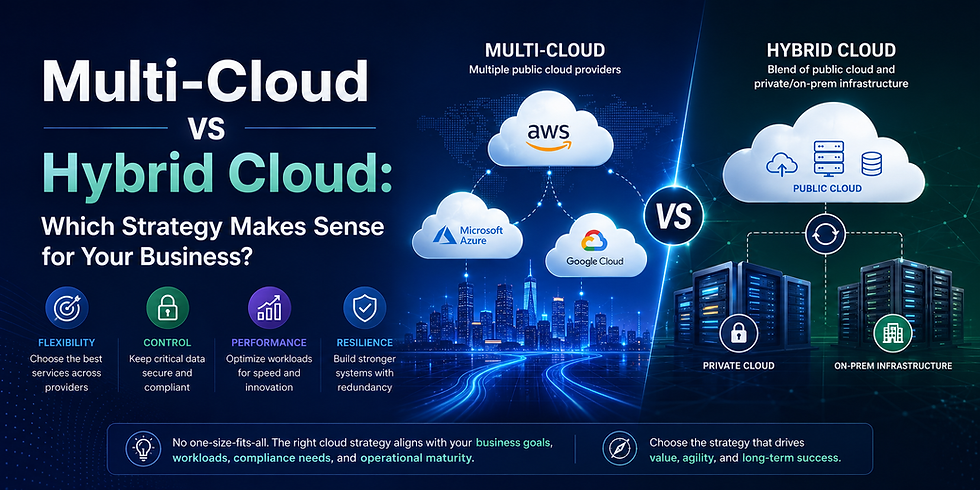
Many enterprises assume their cloud provider handles security end-to-end. That assumption creates risk. The biggest issues we see are over-permissioned IAM, exposed workloads, weak DevSecOps controls, and missing incident response planning. What’s the biggest challenge in your environment? If you’d like a security posture review, let’s connect.